
PATTERSON, La. — Nearly a century before Friday nights in Patterson produced future NFL players, Superdome appearances and some of the most recognizable names in Louisiana high school football, the Lumberjacks were already making people take notice.
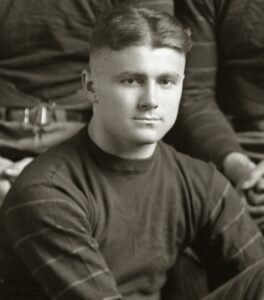
In the mid-1920s, Patterson High School had only a small pool of young men from which to build a football team. Yet under coach Ted Bank, the program produced a pair of teams whose defensive record sounds almost impossible by modern standards.
Patterson reportedly went through the 1925 and 1926 seasons without allowing an opponent to score a single point. Bank, a former University of Michigan quarterback who had played for legendary Wolverines coach Fielding Yost, had come to the small St. Mary Parish school after his college career.
A newspaper account published in Michigan in 1928 described what Bank had accomplished at Patterson, referring to a “championship or near championship football team” at a school with a total enrollment of just 132 students.
Exactly what championship designation that newspaper was referring to has been lost in the fog of early Louisiana high school sports history. Available championship records do not identify Patterson as an official state football champion, and modern historical records list the Lumberjacks with zero state titles.
That distinction matters.
There is not enough evidence to say Patterson won an official Louisiana state football championship in the 1920s.
There is, however, plenty of evidence that football excellence in Patterson did not begin in 1979.
It had been there for generations.
Patterson High’s own history reaches back even further. The school was certified as an approved high school in 1900, and its historical account notes a state track championship in 1922 while also recalling that its football team once competed against Southwest Louisiana Institute, the institution now known as the University of Louisiana at Lafayette.
By the time Patterson reached Louisiana’s state football championship game for the first time in the modern playoff era, the sport had already been part of the school’s identity for more than half a century.
That first trip came in 1979.
Patterson Reaches the Superdome
Under head coach Jack Andre, the Lumberjacks put together one of the greatest seasons in school history, winning 14 games and advancing through the Class 2A playoffs to earn a spot in the state championship game.
Waiting for Patterson was John Curtis Christian.
The Patriots defeated Patterson 28-0, ending the Lumberjacks’ season at 14-1 and denying the program its first recognized state football championship.
The loss did not erase what Patterson had accomplished.
For the first time in the school’s documented modern football history, the Lumberjacks had reached the final game of the season.
And there was another piece of Louisiana football history developing around that team.
Patterson fans had their own rallying cry.
“Who Dat?”
Newspaper accounts from 1979 documented Patterson supporters using versions of the chant during the Lumberjacks’ championship run. Fans were referred to as the “Who Dat Club” and the “Who Dats,” years before the phrase became permanently associated nationwide with the New Orleans Saints.
There are multiple competing claims surrounding the origins of “Who Dat,” and the available evidence does not establish Patterson as its inventor.
But Patterson unquestionably has a place in the early documented history of the chant in Louisiana football.
And one of the players associated with that era would eventually create another remarkable link between Patterson and the Saints.
His name was Dalton Hilliard.
A Football Family Begins to Build a Legacy
Hilliard became one of the greatest players ever produced by Patterson and one of the most accomplished football players to come out of St. Mary Parish.
At Patterson, he rushed for 4,888 career yards and established himself as one of Louisiana’s premier running backs.
His career continued at LSU, where he rushed for 4,050 yards, before the New Orleans Saints selected him in the second round of the 1986 NFL Draft.
Hilliard spent his entire NFL career with New Orleans and rushed for another 4,164 yards.
More than 4,000 rushing yards at Patterson.
More than 4,000 at LSU.
More than 4,000 in the NFL.
His accomplishments eventually earned him induction into the Louisiana Sports Hall of Fame.
And Dalton would not be the last Hilliard to carry Patterson football onto the national stage.
His nephew, Ike Hilliard, became another standout Lumberjack before signing with the University of Florida.
At Florida, Ike became a consensus All-American and helped the Gators win the 1996 national championship. The New York Giants selected him with the seventh overall pick in the 1997 NFL Draft.
He went on to play for the Giants and Tampa Bay Buccaneers, finishing his professional career with 546 receptions, 6,397 receiving yards and 35 touchdowns.
A small city in St. Mary Parish had now produced an NFL running back and a top-10 draft pick.
But Patterson’s biggest stretch of sustained high school success was still ahead.
Patterson Becomes a Class 3A Power
By the early 2000s, head coach Tommy Minton had built Patterson into one of the area’s most consistent programs.
The Lumberjacks became regular playoff participants and developed into a program capable of making deep postseason runs.
In 2002, Patterson did exactly that.
For the first time since 1979, the Lumberjacks advanced to the state championship game.
This time, Redemptorist stood between Patterson and a title.
Redemptorist won 31-19, leaving Patterson as state runner-up for the second time. St. Mary Parish school officials later recognized the team and Minton for reaching the Class 3A state championship game.
Patterson had come up short again, but the program was entering one of its strongest periods.
Throughout much of the 2000s and into the early 2010s, the Lumberjacks became a regular factor in the postseason. Winning seasons, district races and playoff football became expected in Patterson.
Then another Hilliard arrived.
Kenny Hilliard entered Patterson with a familiar last name.
By the time he graduated, he had created a legacy entirely his own.
Kenny Hilliard Rewrites the Record Book
Hilliard rushed for 8,603 yards and scored 106 touchdowns during his Patterson career.
He ran for more than 1,800 yards as a freshman and followed with consecutive 2,000-yard seasons as a sophomore and junior. He was named the Louisiana Sports Writers Association Class 3A Outstanding Offensive Player three times.
By his senior season in 2010, Patterson had another team capable of reaching the final weekend.
For the third time, the Lumberjacks made it all the way to the state championship game.
And unlike the previous two appearances, this one went down to the final minutes.
Parkview Baptist and Patterson battled throughout the Class 3A championship before Parkview escaped with a 24-20 victory.
Four points.
That was all that separated Patterson from its first recognized state football championship.
The Lumberjacks again finished as state runner-up.
Three generations had reached the championship game.
All three had come home one victory short.
For Kenny Hilliard, however, the football road continued.
He signed with LSU and was part of the Tigers’ 2011 Southeastern Conference championship team that reached the BCS National Championship Game. The Houston Texans later selected him in the seventh round of the 2015 NFL Draft.
Once again, a Patterson Lumberjack had made it from St. Mary Parish to professional football.
More Than the Hilliards
The Hilliard family is impossible to separate from Patterson football history.
Dalton became an LSU star, a New Orleans Saint and a Louisiana Sports Hall of Famer.
Ike became a national champion at Florida and the seventh overall selection in the NFL Draft.
Kenny became one of the most prolific running backs in Louisiana high school history before playing at LSU and reaching the NFL.
But Patterson football is not simply the story of one family.
It is also the story of generations of players whose names never appeared on an NFL roster.
It belongs to linemen, defensive backs, quarterbacks and special-teams players.
It belongs to the coaches who built teams year after year, the trainers on the sideline, the band in the stands and the families who spent fall Fridays beneath the lights.
It belongs to a community that has watched football become part of its identity.
That identity stretches much farther back than most people may realize.
A History That Reaches Back a Century
The discovery of Patterson’s success in the 1920s adds another layer to the program’s story.
Ted Bank arrived in Patterson after playing quarterback at Michigan. He would later coach at Tulane and eventually become the head football coach and athletic director at the University of Idaho.
But before any of that, he coached high school football in Patterson.
And during 1925 and 1926, his teams reportedly did something extraordinary: They did not surrender a point.
The 1928 newspaper description of Patterson as a “championship or near championship” program raises an intriguing historical question about exactly how those teams were viewed at the time.
For now, the historical record does not support adding a state championship to Patterson’s résumé.
What it does support is something nearly as significant.
Long before the Superdome.
Long before Dalton Hilliard.
Long before Tommy Minton and the powerful teams of the 2000s.
Long before Kenny Hilliard rewrote rushing records.
Patterson was already a football town.
Three Trips, One Goal Still Unfinished
In the recognized state championship record, Patterson’s closest calls remain clear:
1979 — Class 2A State Runner-Up
John Curtis 28, Patterson 0
2002 — Class 3A State Runner-Up
Redemptorist 31, Patterson 19
2010 — Class 3A State Runner-Up
Parkview Baptist 24, Patterson 20
Three championship appearances.
Three runner-up finishes.
No recognized state football championship.
Yet reducing Patterson’s history to the absence of a trophy would miss most of the story.
This is a program whose roots reach back more than a century.
A program that produced teams in the 1920s that reportedly went two entire seasons without allowing a point.
A program that reached three state championship games in three different generations.
A program connected to the early Louisiana history of “Who Dat.”
A program that produced Dalton Hilliard, Ike Hilliard and Kenny Hilliard.
And a program from a small St. Mary Parish community that repeatedly sent players to major college football and eventually the NFL.
The uniforms have changed.
The coaches have changed.
The classifications have changed.
Even the stadiums and opponents have changed.
But each fall, another group puts on Patterson’s red and black and becomes part of something that started long before any of them were born.
The Lumberjacks have spent more than a century building their football history.
The one thing they have not yet done is bring home a recognized state championship.
And perhaps that is what makes the next chapter so compelling.
After all these years, there is still history left to make.